
By Rajeev Singh
India’s knowledge heritage has developed through many communities, languages and ways of life. Its traditions related to health, food, plants, forests, farming, and community well-being have been shaped by classical learning systems, indigenous Adivasi knowledge, local practices, and generations of practical experience.
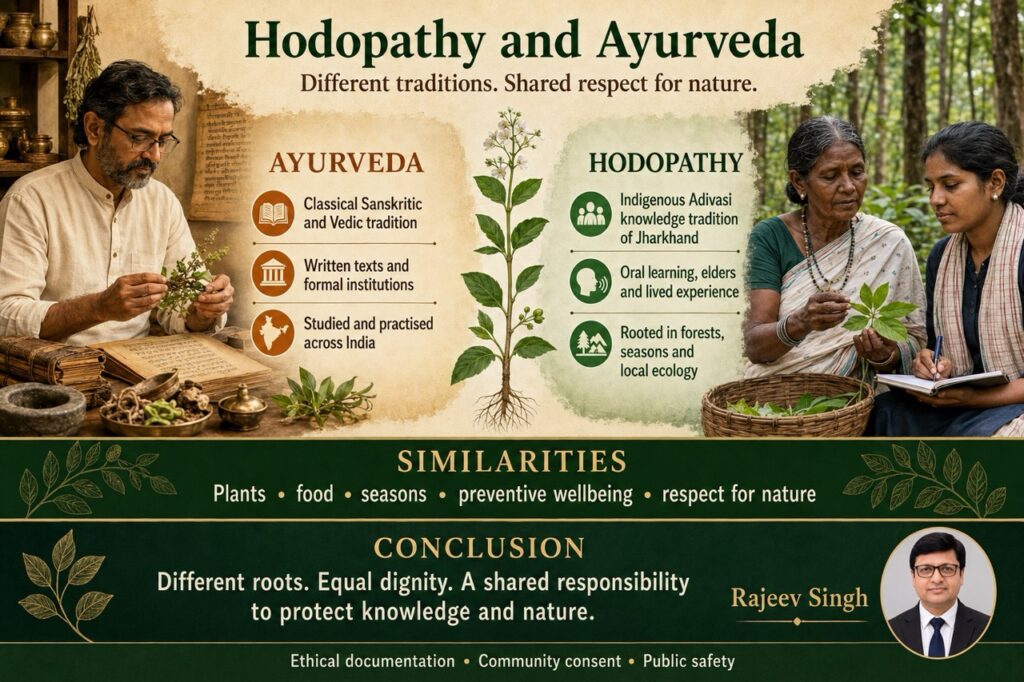
Ayurveda and Hodopathy are often discussed together because both recognise the importance of nature, plants, food habits and balance in human wellbeing. Yet they are not the same tradition. They have different cultural roots, methods of learning, languages, forms of documentation and relationships with local communities.
Understanding these distinctions is important. It helps us recognise Hodopathy with its own identity, while also appreciating Ayurveda as one of India’s important classical knowledge systems.
What is Ayurveda?
Ayurveda is a classical Indian system of health and wellbeing that developed within the Sanskritic and Vedic knowledge tradition. Its principles are documented in texts such as Charaka Samhita, Sushruta Samhita and Ashtanga Hridaya.
Ayurveda includes organised concepts of body constitution, often described through Vata, Pitta and Kapha. It considers diet, daily habits, seasonal routines, herbs, therapies and preventive wellbeing as important elements of a healthy life.
Over time, Ayurveda developed a formal structure of study and practice. It is now taught in recognised colleges and institutions, supported by written literature, standard terminology, trained professionals and regulated systems of education and practice.
What is Hodopathy?
Hodopathy is an indigenous Adivasi knowledge tradition associated particularly with the Ho community and other Adivasi communities of Jharkhand. It has developed through generations of close observation of forests, hills, rivers, soil, wildlife, seasonal foods and medicinal plants.
Hodopathy is not mainly based on classical Sanskrit texts or formal institutions. Its knowledge has traditionally been carried through oral learning, lived experience, observation, community practice and the guidance of elders and traditional knowledge holders.
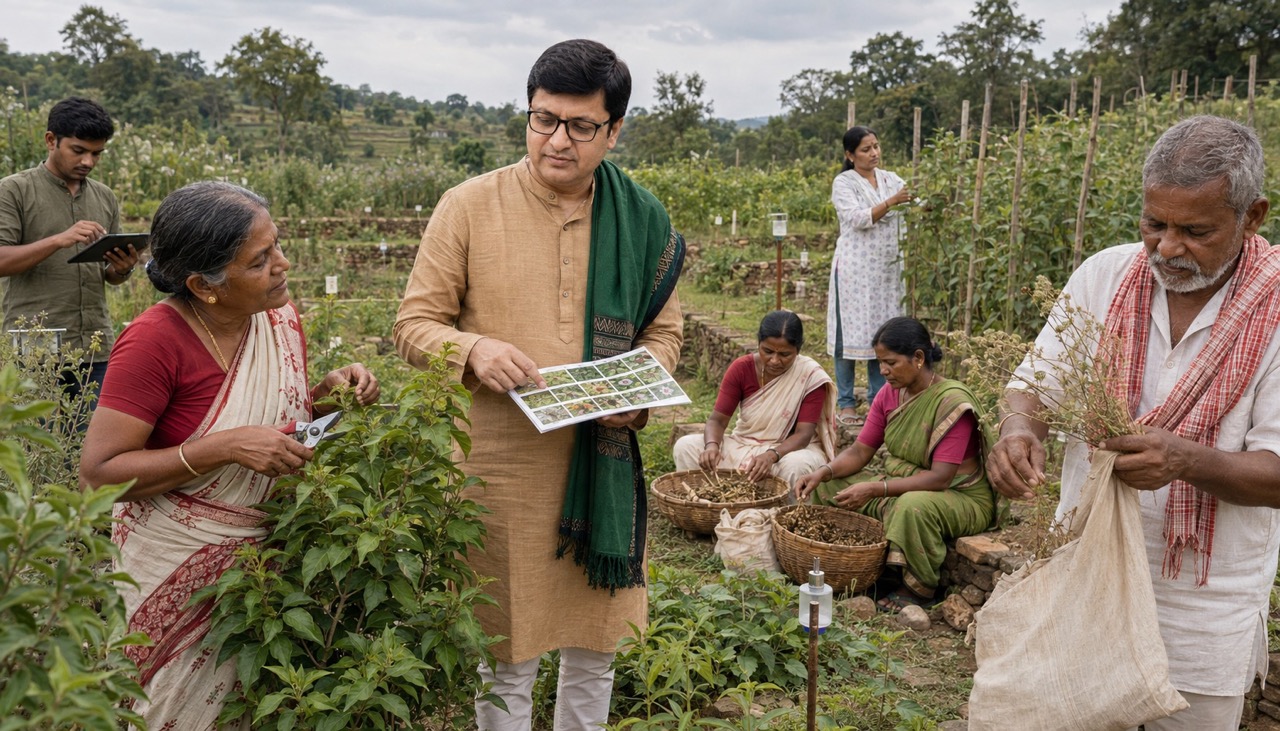
A Hodopathy knowledge holder may understand the local name of a plant, the forest or landscape where it grows, the appropriate season for collection, the method of preparation and the cultural responsibility connected with its use. This makes Hodopathy deeply connected with local ecology and community life.
“Hodopathy is not merely about medicinal plants. It is a living relationship between people, forests, food, seasons, culture and collective memory.”
— Rajeev Singh
Key Differences Between Ayurveda and Hodopathy
| Point | Ayurveda | Hodopathy |
|---|---|---|
| Cultural foundation | Classical Sanskritic and Vedic knowledge tradition | Indigenous Adivasi knowledge tradition, especially associated with the Ho community |
| Knowledge transmission | Written texts, formal study and recognised institutions | Oral learning, observation, practical experience and community knowledge holders |
| Language base | Sanskrit and later many regional languages | Ho language and other local Adivasi languages |
| Nature of knowledge | Codified, structured and widely documented | Local, ecological, community-based and living tradition |
| Geographical character | Studied and practised across India and internationally | Strongly connected with Jharkhand’s forests, land, seasons and communities |
| Present recognition | Formal education, professional training and regulated systems | Needs greater documentation, community protection and ethical recognition |
| Main knowledge setting | Texts, institutions, clinics and formal learning | Forests, villages, homes, farms and intergenerational community learning |
It is therefore not accurate to call Hodopathy simply “Ayurveda of Jharkhand.” Such a description may unintentionally hide Hodopathy’s separate Adivasi identity. Hodopathy has its own cultural memory, local plant knowledge, language, methods of preparation and understanding of the relationship between people and nature.
Similarities Between Ayurveda and Hodopathy
Despite their different origins and systems of learning, Ayurveda and Hodopathy share important values.
Both traditions recognise that human wellbeing is connected with nature. Both value plants, food habits, seasonal awareness and preventive care. Both encourage people to observe their environment and respect the role of natural resources in daily life.
Both traditions also remind us that wellbeing is not only about treating illness. It is connected with lifestyle, food, cleanliness, rest, seasonal discipline, social relationships and the responsible use of natural resources.
| Shared Value | Ayurveda | Hodopathy |
|---|---|---|
| Nature-based understanding | Uses herbs, diet and seasonal routines | Uses local plants, foods, forests and ecological knowledge |
| Preventive wellbeing | Focuses on daily and seasonal practices | Emphasises local food, seasonal living and community practices |
| Plant knowledge | Documents herbs and formulations | Preserves local knowledge of plants and their habitats |
| Holistic view | Connects body, lifestyle and environment | Connects people, community, culture and nature |
| Intergenerational learning | Knowledge passed through teachers and texts | Knowledge passed through elders, families and community practice |
“Ayurveda and Hodopathy have different roots, but both teach us an essential truth: human wellbeing cannot be separated from respect for nature.”
— Rajeev Singh
Why Hodopathy Needs Protection
Ayurveda has received wide recognition through books, colleges, institutions and formal education. Hodopathy, however, remains less documented and is at risk of being lost.
Forest degradation, migration, weakening of local languages, reduced learning from elders and unauthorised use of indigenous knowledge can slowly erode this valuable heritage. When an elder passes away without transferring knowledge to younger generations, a part of Jharkhand’s cultural and ecological memory may disappear.
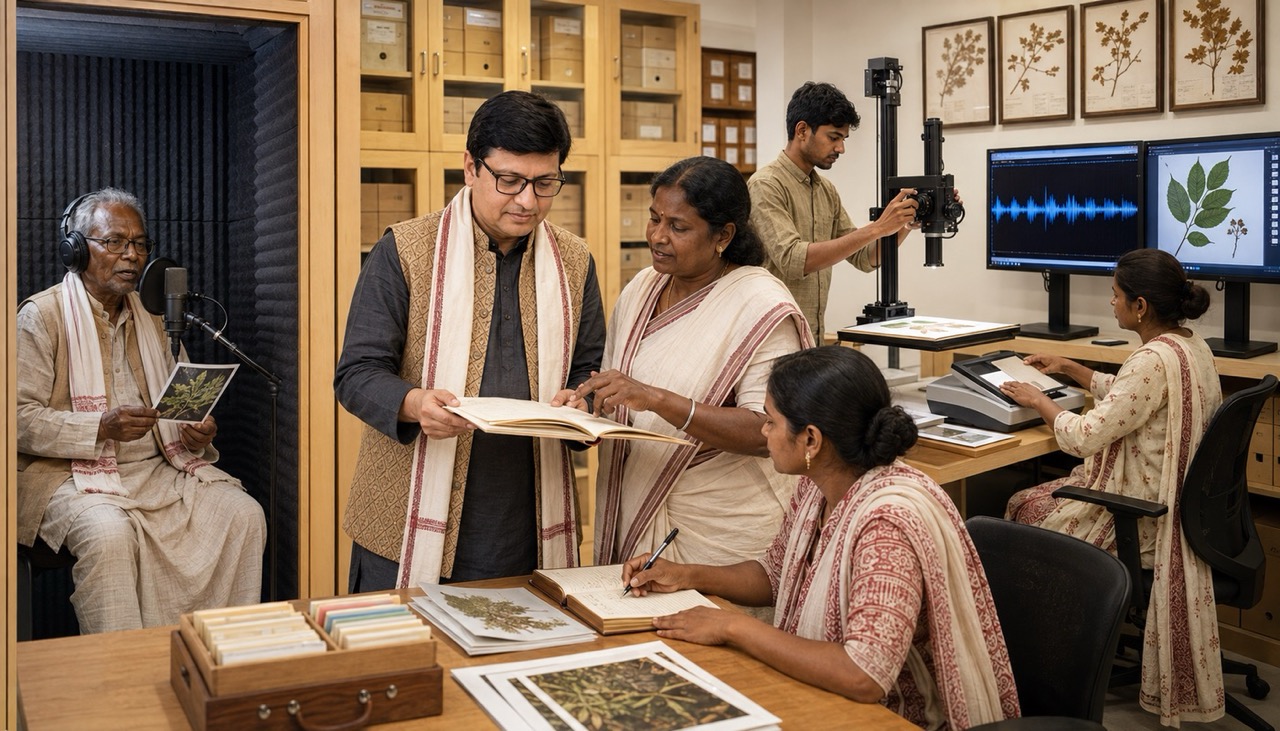
Documentation of Hodopathy must be ethical and community-led. Traditional knowledge holders should be recognised as contributors and rights holders, not treated only as sources of information. Their prior consent must be taken before recording, researching or publishing knowledge. If research or commercial activity creates benefits, those benefits should be shared fairly with the concerned communities.
Responsible Use and Public Safety
Respecting Hodopathy does not mean making unsafe or unverified claims. Traditional knowledge should not be promoted as a replacement for hospitals, emergency care, diagnosis or treatment by qualified medical professionals.
For serious illness, infection, injury, pregnancy complications or chronic health conditions, people must seek appropriate medical advice. Responsible research should examine traditional knowledge carefully, with safety, evidence, community consent and public wellbeing as guiding principles.
Conclusion
India does not have one single knowledge tradition. It has many. Ayurveda represents an important classical Sanskritic and Vedic system with written texts, institutional learning and a long history of formal study. Hodopathy represents a valuable indigenous Adivasi knowledge tradition rooted in Jharkhand’s forests, communities, languages and lived ecological experience.
The purpose of recognising their differences is not to create division. It is to give each tradition its rightful identity and respect.
Protecting Hodopathy means protecting Adivasi dignity, the wisdom of elders, local languages, medicinal plant knowledge, forests, biodiversity and the cultural heritage of Jharkhand.
“India becomes stronger when every community’s knowledge is recognised with dignity, protected with ethics and carried forward for future generations.”
— Rajeev Singh